Limousine Service Cost: How Pricing Works in 2026
Updated November 9, 2026

You land at JFK with four suitcases, a house key waiting in Southampton, and two quotes on your phone that don't look like the same trip. One number moves if the hour gets busy. The other stays put. That gap is the limousine service cost, and it isn't a single average. It is what the quote covers once waiting, luggage, tolls, and the empty ride back are counted.
Table of Contents
- Hourly or Point-to-Point Pricing and Which Fits Your Trip
- How Vehicle Size and Passenger Count Set the Base Rate
- Add-On Fees That Change the Final Bill
- Realistic Quote Examples for Hamptons Trips
- Lower Your Cost and Confirm a Fixed Price
- When a Higher Quote Costs Less Overall
Hourly or Point-to-Point Pricing and Which Fits Your Trip
| Pricing model | How the quote is built | Best for | What can change the bill |
|---|---|---|---|
| Hourly booking | Billed by the hour for the vehicle and chauffeur, so the block covers waiting, stops and shopping | Multi-stop days, weddings, and dining or shopping itineraries | Length of the booked block and any time past it |
| Point-to-point (one-way) | One fixed price for a single trip, quoted before the client steps into the vehicle | Airport transfers and single runs between towns or from New York City | Route changes, extra stops and added waiting |
| Round-trip or fixed-route | One trip priced together with its return | Day trips and planned journeys with a set return | Changes to the return time or the planned route |
| Ride-share app | Price set at booking and shaped by real-time demand | Short, flexible trips at quiet times | Peak-season demand, which can raise the fare |
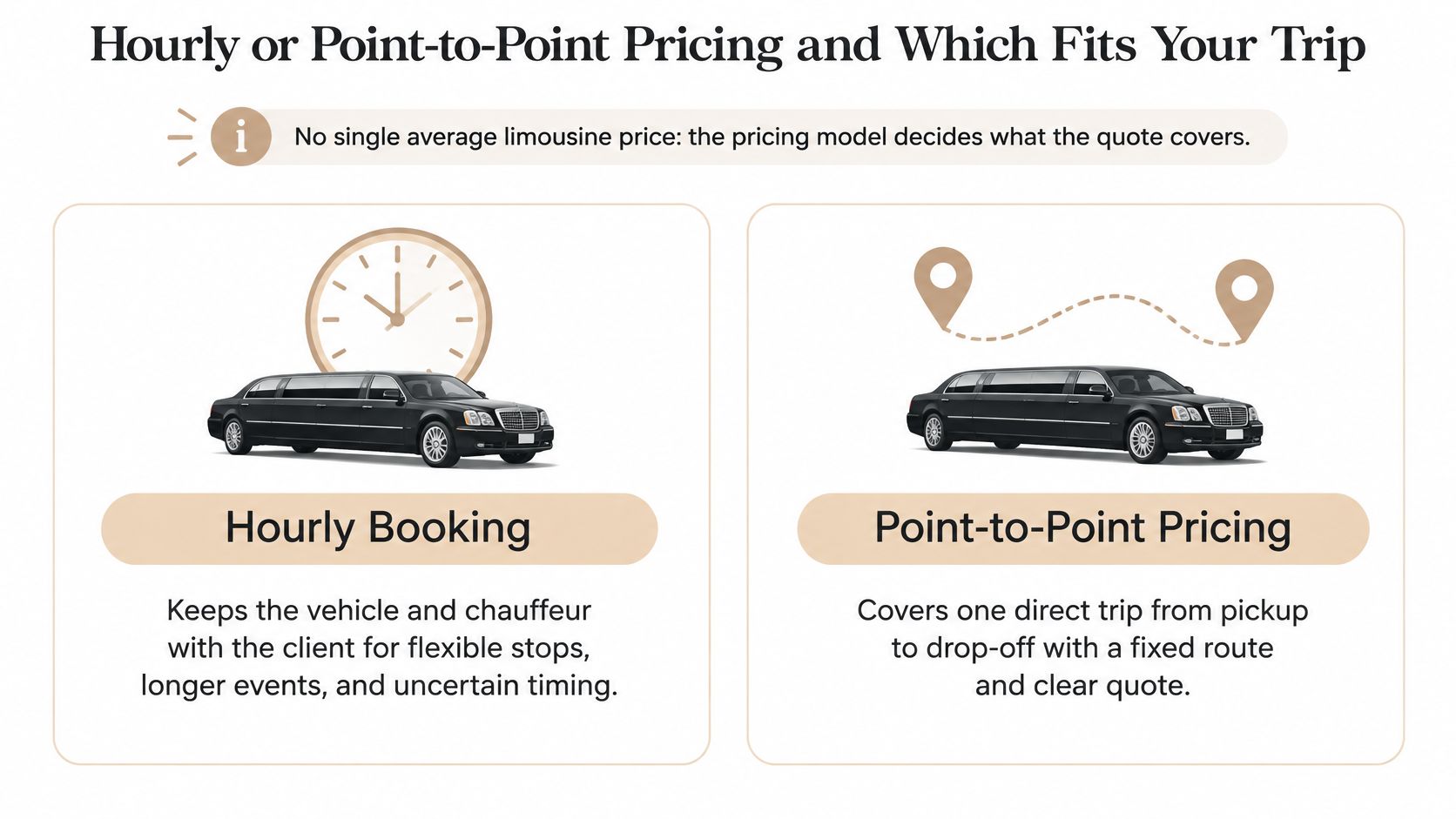
There is no single average limousine price. The model decides what the number covers.
Hourly booking keeps a private vehicle and chauffeur with you for a set block. The bill follows the clock, including waiting, stops, and shopping. Point-to-point service prices one trip from pickup to drop-off, and the fare is agreed before you step in. It is fixed pricing for a one-way run, with no surge. Private service means a dedicated vehicle and no shared rides.
Three trips, three fits
A wedding day that moves between a getting-ready house, a ceremony, and a reception suits hourly booking. The vehicle stays, and the stops stay inside the block. If you want the detail on how those hours are reserved, our note on hourly black car service walks through the booking shape.
A single airport transfer from JFK to a Southampton address suits a fixed point-to-point quote. You know the start, the end, and the luggage. You don't need the car for the afternoon.
A dinner pickup with a planned return can go either way. Two addresses and a short wait fit a round trip priced together. Three restaurants and an open end fit an hourly block, because the extra stops would rewrite a one-way quote.
List every stop and estimate the waiting time. Choose the model that keeps all of it inside one agreed price.
A fixed quote doesn't rise with peak-season demand. That is the main difference from an app fare, which can move after you have already planned the night. If you are weighing ground options before a flight, you can explore travel topics from HearSmart and then match the model to the stops you have.
How Vehicle Size and Passenger Count Set the Base Rate
The base rate follows the vehicle. A larger vehicle carries more seats, more luggage, and a crew sized for the group. Count people and bags first. Appearance comes second.
| Vehicle | Passenger capacity | Typical use | How it affects the quote |
|---|---|---|---|
| Mercedes-Benz S-Class | Up to 3 | Airport transfers and couples | Lowest seat count, so most efficient for small parties |
| Premium SUV (Chevrolet Suburban or Cadillac Escalade) | Up to 6 | Small families and groups with luggage | Covers more bags in one vehicle |
| Mercedes-Benz Sprinter van | Up to 14 | Group airport runs and wine tours | One vehicle can replace several sedans |
| 55 passenger coach | 55 | Weddings, corporate outings and school trips | Single booking for the largest groups |
Our working fleet is a Chevrolet Suburban, a Mercedes S-Class, a Mercedes Sprinter, and a 55-seat coach. For groups between a Sprinter and that coach, 25-passenger and 36-passenger mini-buses fill the gap on wedding shuttles and corporate moves.
What the federal labels actually mean
The Federal Motor Carrier Safety Administration equipment definitions treat a mini-bus or van as a multipurpose passenger vehicle carrying 10 to 24 people. A motor coach is built for longer-distance passenger transportation and commonly includes overhead storage and a baggage compartment. Those labels explain why a wine-tour van and a full coach are not the same line item, even on the same date.
Seat count is only half the quote. A Suburban holds up to six and the bags that won't fit a sedan. A Sprinter holds up to fourteen, so one booking can replace several cars on a group airport run. Seating layout for that van is spelled out in our Sprinter van seating guide. The 55-passenger coach is the vehicle we use for wedding shuttles, corporate outings, and school trips, where everyone needs to leave together.
Count passengers and bags, not the photo on the brochure. When the whole group and its luggage fit one vehicle, the trip is priced once.
Add-On Fees That Change the Final Bill
The base rate covers the vehicle and chauffeur for the trip as booked. Add-ons appear when the scope changes. Confirm each line before the vehicle is reserved.
| Add-on | When it applies | Question to ask before booking |
|---|---|---|
| Airport pickup handling | Arrivals at JFK, LaGuardia, Newark, MacArthur or private airports | Are curbside pickup and flight tracking part of this quote? |
| Waiting time | Pickup runs past the scheduled window or the flight lands late | How is waiting counted, and from what point? |
| Tolls | Routes that cross tolled roads or bridges | Are tolls included in the fixed price? |
| Parking | The chauffeur waits or parks during a stop | Is parking covered in the quote? |
| Extra stops | Added pickups or drop-offs on a point-to-point trip | Does a new stop change the quote? |
| Hourly overtime | The trip runs past the booked hours | What is the rate once the block ends? |
| Return positioning | One-way trips that leave the vehicle away from its base | Is the return distance built into the price? |
| Luggage and child seats | Bags or seats beyond the standard load | Which items are included, and which must be requested? |
| Gratuity | Gratuity handled apart from the quote | Is gratuity included or expected separately? |
| Cancellation | A booking changes or ends close to the pickup time | What is the cancellation window? |
The two items that surprise people
Waiting time is work even when the car looks parked. A pickup that runs past the scheduled window, or a flight that lands late, still holds the chauffeur and the vehicle. Ask from which minute that time is counted.
Return positioning is the empty trip after a one-way drop. A price built only on passenger miles understates that work, because the vehicle still has to get back toward its base. Tolls and parking sit in the same bucket. They are route costs, not extras invented at the curb.
Say the quote is JFK to Southampton, direct. You then add a stop in Bridgehampton for a grocery run. That stop changes distance, time, and possibly parking. A fixed quote has to be rewritten to cover it, or the stop stays off the trip.
What the base rate already includes
The booked price is meant to hold the vehicle, its insurance and upkeep, fuel, chauffeur time, and, on a one-way run, the drive back toward base. Child seats are requested ahead, not assumed at the curb. Gratuity is either inside the quote or expected separately, and you should hear which one before you book.
We don't add surge fees or hidden charges. Your job is still to confirm exactly what the quote includes, line by line, before the vehicle is booked.
Realistic Quote Examples for Hamptons Trips
Match the scene, then check the variable named with it.
A family of four rolls out of JFK with suitcases and a car seat, heading to a Southampton house. This is a fixed point-to-point quote in a premium SUV, or a Sprinter if the bags won't close the hatch. The luggage count, and any stop on the way, decides the price.
Guests move between Sag Harbor and Montauk on a wedding day, with photos in between. This is an hourly block in a Sprinter or a 25-passenger mini-bus. Block length, the number of stops, and time past the block shape the total.
Thirty executives need one departure for an offsite, with bags and a set return. This is the 55-passenger coach. Federal rules define a motorcoach as a bus with a gross vehicle weight rating of at least 26,000 pounds, 16 or more designated seating positions including the chauffeur, and at least two rows of passenger seats behind the chauffeur, per the Federal Register motorcoach definition. That is a different class from a passenger van. Return time and waiting between sessions drive the quote. Onboard storage and one departure beat splitting the group across several cars.
A solo traveler lands at MacArthur and continues to Montauk. This is a fixed point-to-point trip in a Mercedes-Benz S-Class. Pickup timing against the flight is the main variable.
A late return from a North Fork wine tour, with three wineries still on the card, is an hourly block in a Sprinter. The number of stops and the time at each winery set the cost.
Find the scene that matches your trip and check the variable beside it before you ask for a number.
Lower Your Cost and Confirm a Fixed Price
The largest saving on an airport day is a fixed one-way quote. The fare is set before pickup, and the total is known. Point-to-point rides are quoted before the client steps into the vehicle. From our Southampton base, that quote is built for the specific pickup, destination, and vehicle, not a generic hourly guess.
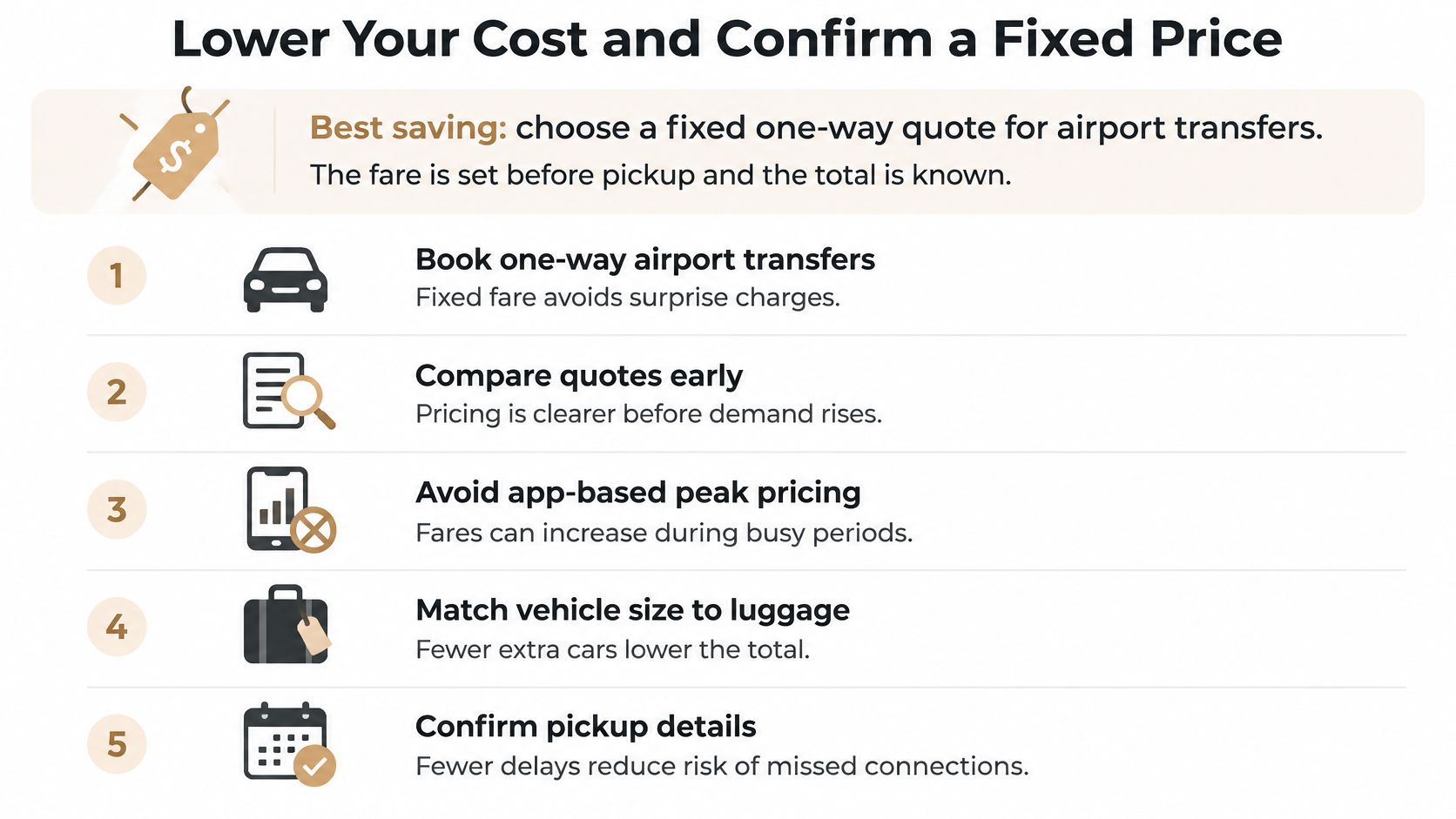
Five ways to keep the total down
Book hourly only for the hours you will use. Add a short buffer rather than a full extra block. Hourly booking keeps the vehicle and chauffeur with you for as long as needed, so unused time is time you still pay for. A dinner with a known end doesn't need a whole extra hour "just in case" if a modest buffer already covers the coat check.
Give the flight number when you book. Pickup can follow the actual arrival instead of a guess made the week before. That avoids a car sitting early, or a client standing outside while the schedule is rebuilt by text.
Put the group in one larger vehicle when everyone and the bags fit. One booking is priced once. Three sedans for one wedding party means three pickups, three returns, and three chances for a late car.
Plan every stop before the quote is written. A stop that is named up front sits inside the original price. A stop added on the road becomes a change. Tell us the winery, the club, or the second house at the start.
Compare the quote with a ride-share estimate for the same route and the same hour. Count waiting and extra cars in both totals. An app price that looks lower before tolls, a second vehicle, and a peak-hour jump is not the lower total. How a written fare is locked is covered in our fixed-price booking notes.
Checklist before you book
- Addresses: Pickup and drop-off, including any terminal or house name.
- Vehicle: The one that fits passenger count and luggage, not the one that looks largest.
- Model and block: Point-to-point, round trip, or hourly, and the hours if hourly.
- Flight number: So arrival changes can be watched.
- Add-ons inside the quote: Tolls, parking, waiting, gratuity, and child seats.
- Cancellation window: What happens if the day moves.
Rates depend on pickup location, destination, and vehicle type, so an exact figure comes from a quote for that trip. Text (631) 294-0747 for a quote, and ask for the fixed price to be written out with every item listed before the day of travel.
When a Higher Quote Costs Less Overall
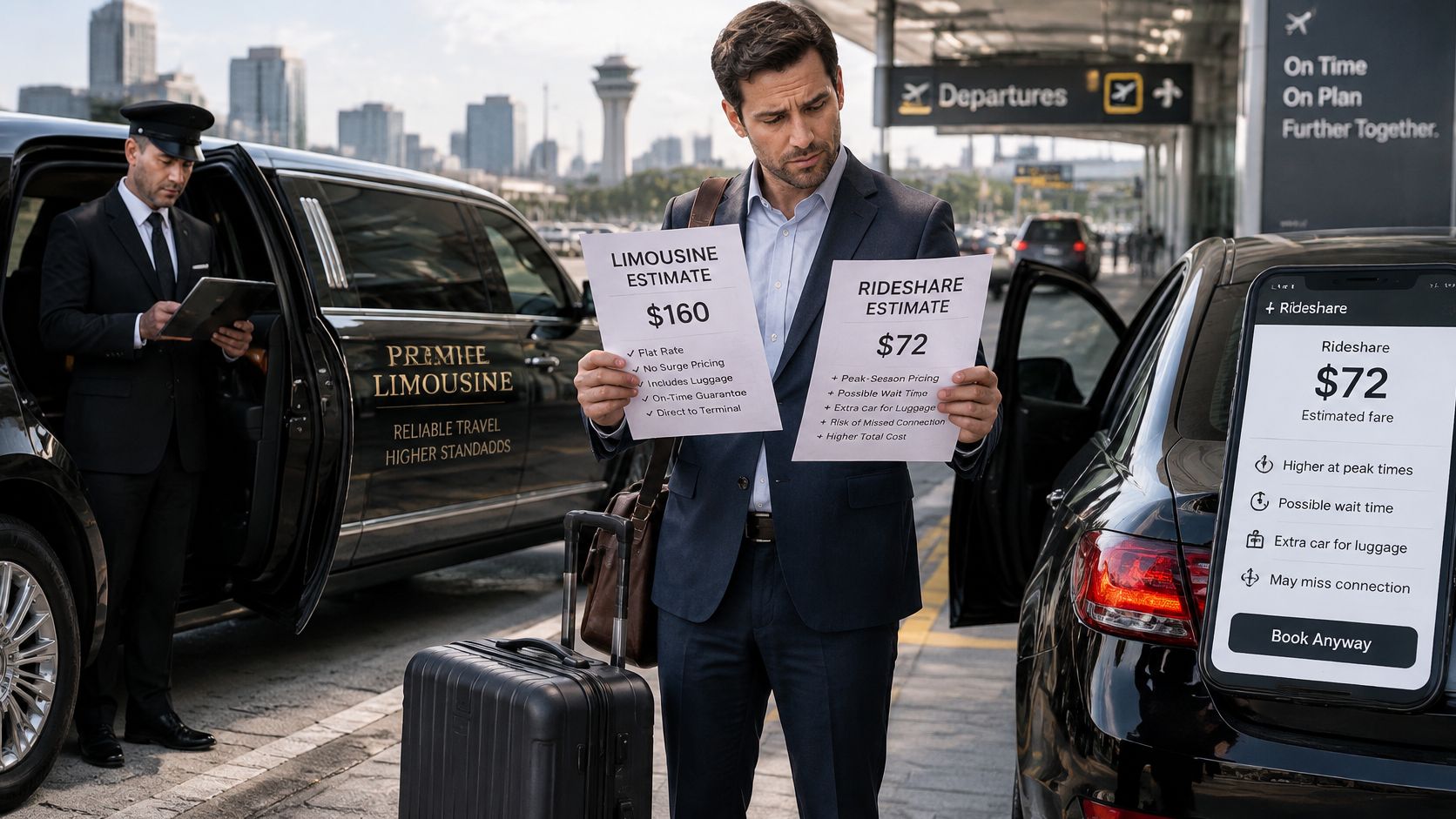
The lowest fare is not always the lower total. A cheap app price can rise through peak-season demand, an uncertain wait, a second car for luggage, or a missed connection. Each of those is a real cost, even when it never shows on the first screen.
How a fixed transfer treats a late flight
When you supply the correct flight number, the transfer can be watched and the pickup recalculated around the updated arrival, usually with time for baggage claim, immigration, or customs. Transpovia's flight-delay guidance notes that routine delays commonly don't change a fixed, pre-agreed rate, because the price is tied to the trip rather than the original landing time. Diversions, overnight changes, a different airport, or a replacement flight number need a direct call and may be treated as a rebooking.
We are USDOT registered and commercially insured, and the desk is open 24 hours a day, 7 days a week, 365 days a year, so a late arrival is a timing change, not a hunt for a new car.
A break-even test you can run
Estimate the cost of a missed connection, a second car, or an extra hour of waiting. Compare that total with the gap between the two quotes. Say the app looks cheaper for a family landing at Newark with golf bags and a car seat. A second vehicle is likely once the bags are on the curb, and a peak-hour jump is likely on a Friday. The fixed transfer covers the same people, the same bags, and the same address in one vehicle, with no surge. If the risk is larger than the price gap, the fixed booking is the rational choice.
Practical rule: If a missed connection or a second car costs more than the gap between quotes, take the quote that already includes the wait.
Hamptons Leisure Limo is a family-owned black car and limousine service in Southampton, with fixed pricing and no surge on airport runs, hourly blocks, and group coaches. If you want the limousine service cost for your addresses, vehicle, and timing written out before the day, text (631) 294-0747 and ask for every line item in the quote. Visit Hamptons Leisure Limo to match a Southampton-based car to the trip.
Ready to Ride with Hamptons Leisure Limo?
Fixed pricing. No surge fees. 30 years of experience serving the Hamptons. Text us what you need and we will send a quote.