Pet Friendly Car Service Guide: Rules, Safety and Booking
Updated November 12, 2026

Your suitcase is by the door, your dog is watching every move, and the car booking still has an unanswered question: will there be room for the pet, the carrier, and everyone's luggage? If you're heading from the Hamptons to an airport, a veterinary appointment, or a weekend stay, that uncertainty is the last thing you need at pickup.
A pet friendly car service should settle those details before travel day. Permission to bring an animal is only the starting point. Restraint, vehicle fit, and timing determine whether the ride is properly planned, not the pet-friendly line on a website.
Table of Contents
- Pet Types, Restraints and Seating at a Glance
- How to Book and Prepare a Pet-Friendly Ride
- Why Restraints Matter More Than Good Intentions
- Flights, Delays and Heat on Airport Transfers
- Keeping Pets Calm, Cool and Clean on the Road
- Pet Travel Scenarios Across the East End
- Text for a Quote and Book Your Pet-Friendly Ride
Pet Types, Restraints and Seating at a Glance
A pet-friendly car service is a booked chauffeur ride where your pet travels with you. The arrangement works when the restraint matches the animal and the assigned vehicle has a suitable place to secure it.
Restraint and placement by pet type
| Pet | Recommended restraint | Where it rides |
|---|---|---|
| Small dog or cat | Secured crate or carrier large enough to stand, turn, and lie down | Rear passenger area, anchored in place |
| Large dog | Harness attached to the vehicle seat-belt system | Rear seat, not beside an active airbag |
| Dog in an SUV or van with open cargo space | Size-appropriate, ventilated kennel secured in place | Enclosed cabin area, never loose or tethered in open cargo |
| Any pet | No lap riding, no position near the pedals or in front of an active airbag | Rear area only |
| Multiple pets or pets with luggage | Individual restraint for each animal | Sprinter van or 55-seat coach as the fleet allows, with suitable restraint positions confirmed |
This is a common travel need. In its 2024 Dog and Cat Owner Insight Report, the American Pet Products Association reported that 88% of dog owners and 90% of cat owners had traveled with their pets in a car during the previous year.
Hamptons Leisure Limo welcomes pets, with fleet options ranging from premium SUVs and Mercedes-Benz Sprinter vans to a 55-seat coach. Vehicle assignment still requires an animal-by-animal assessment. More passenger seats don't automatically mean more compatible kennel positions.
Read the table as a fit checklist
Find your animal's row, identify the restraint, and then check the proposed placement. Send each pet's approximate weight, the carrier's exterior dimensions, and the total pet count when booking. A carrier that fits through a door must also fit securely in its intended riding position without blocking ventilation.
Plan to bring your pet's familiar carrier or harness unless another arrangement has been explicitly confirmed. Equipment supply, attachment compatibility, and loading assistance need a clear answer before pickup.
If you're deciding between chauffeured transportation and driving yourself, Passpaw's guide can help you compare rental car pet policies. Rental permission and a prepared chauffeur ride are different arrangements, so compare the practical responsibilities as well as whether animals are allowed.
Size or breed limits and equipment responsibility are confirmed at the quote stage, not assumed from the vehicle name.
How to Book and Prepare a Pet-Friendly Ride
Start with a complete trip message rather than asking whether dogs are allowed. A useful booking record tells us what's traveling, where it needs to go, and what must be ready at the curb.
The first exchange establishes the route and the animal's space requirements.
Send the details and settle responsibilities
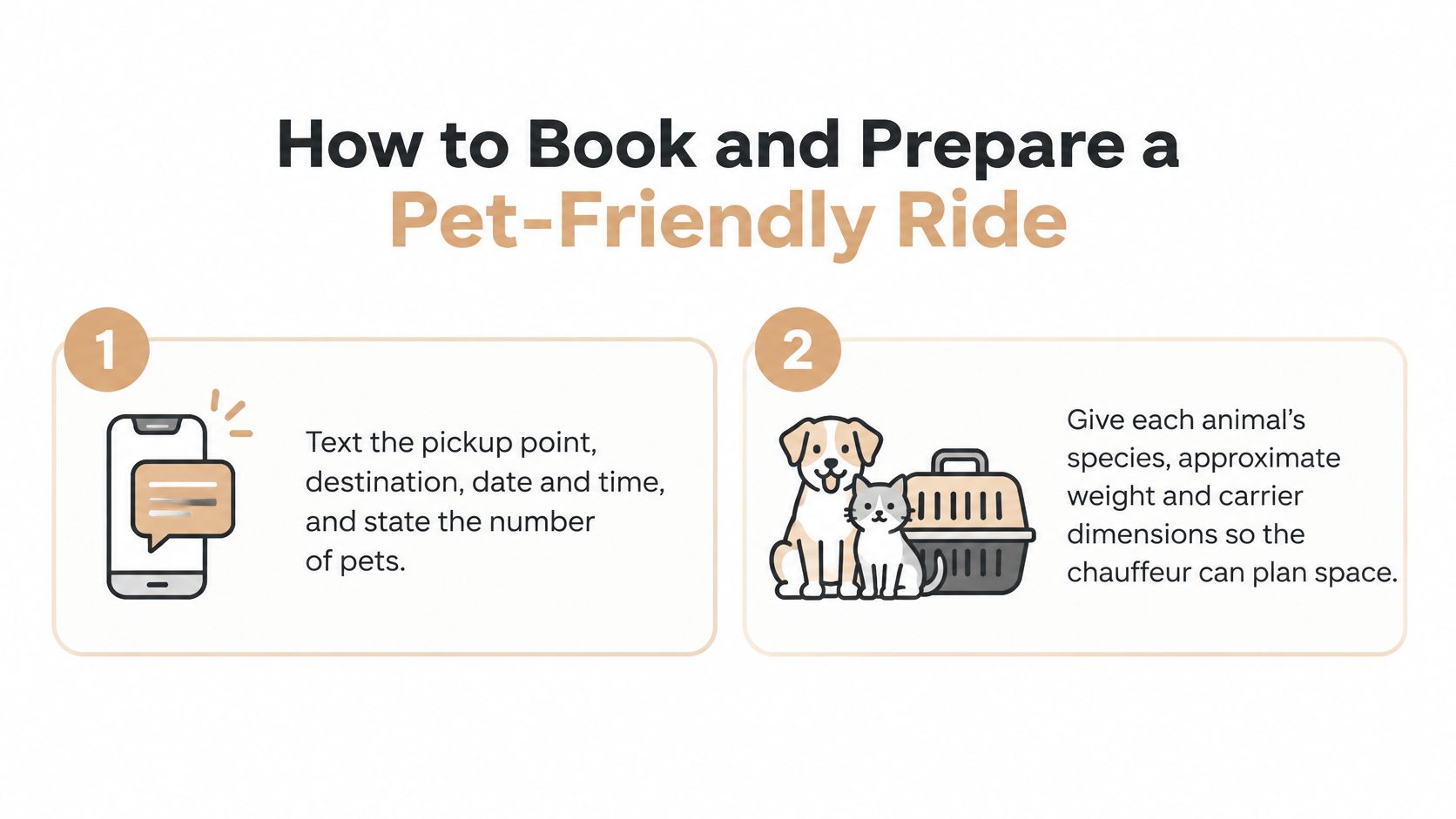
Text the pickup point, destination, date, time, and number of pets. Include the actual entrance or pickup address so the chauffeur isn't searching while you manage an animal outside. The common mistake is mentioning the pet only after the vehicle has been assigned.
Give each animal's species, approximate weight, and carrier dimensions. Measure the carrier's exterior length, width, and height, including protruding handles or wheels, so we can plan usable space. Booking without dimensions can leave you with a carrier that won't fit safely in the proposed position.
Confirm who supplies the carrier, harness, and cleanup materials. Identify the restraint you intend to bring and ask whether its attachment method works with the vehicle. Don't assume a pet-friendly booking includes company-supplied safety equipment or a seat cover.
Settle the seating arrangement for a large dog. Confirm whether the dog will occupy a rear passenger seat or travel in a secured kennel in the enclosed cabin area. Counting only the human passengers can overlook a seat needed for the animal or the space taken by its restraint.
Build the pickup window around the appointment or flight. Share the flight number or appointment time, explain any expected waiting, and confirm how long the chauffeur will wait. Don't treat an arrival time as the moment you'll be ready at the curb, especially when baggage and pet handoff procedures are involved.
Prepare the pet's bag the day before. Gather water, a dish, leash, identification, relevant vaccination records, medication, and an emergency contact, then give the animal time to settle around its familiar equipment. Leaving everything until departure morning adds activity and noise just when an anxious pet needs a predictable routine.
Our fleet has four vehicles: a Chevrolet Suburban, Mercedes-Benz S-Class, Mercedes-Benz Sprinter, and 55-seat coach. Selection follows the complete load, including people, animals, carriers, and bags, rather than the pet's weight alone.
Confirm the quote and the pickup
Pricing: Your ride is quoted at fixed pricing with no surge. Pet count, approximate weight, and carrier size are confirmed within that quote rather than left as a surprise add-on. Text (631) 294-0747 to receive the total before travel.
For airport journeys, our airport transfer quote guide helps you organize the itinerary details needed for a complete request.
A ready pickup is straightforward: the animal is already in its carrier or wearing its fitted harness, the bag is packed, and you're at the agreed curb when the chauffeur arrives. The final vehicle attachment is checked before departure, not improvised while the car is moving.
Why Restraints Matter More Than Good Intentions
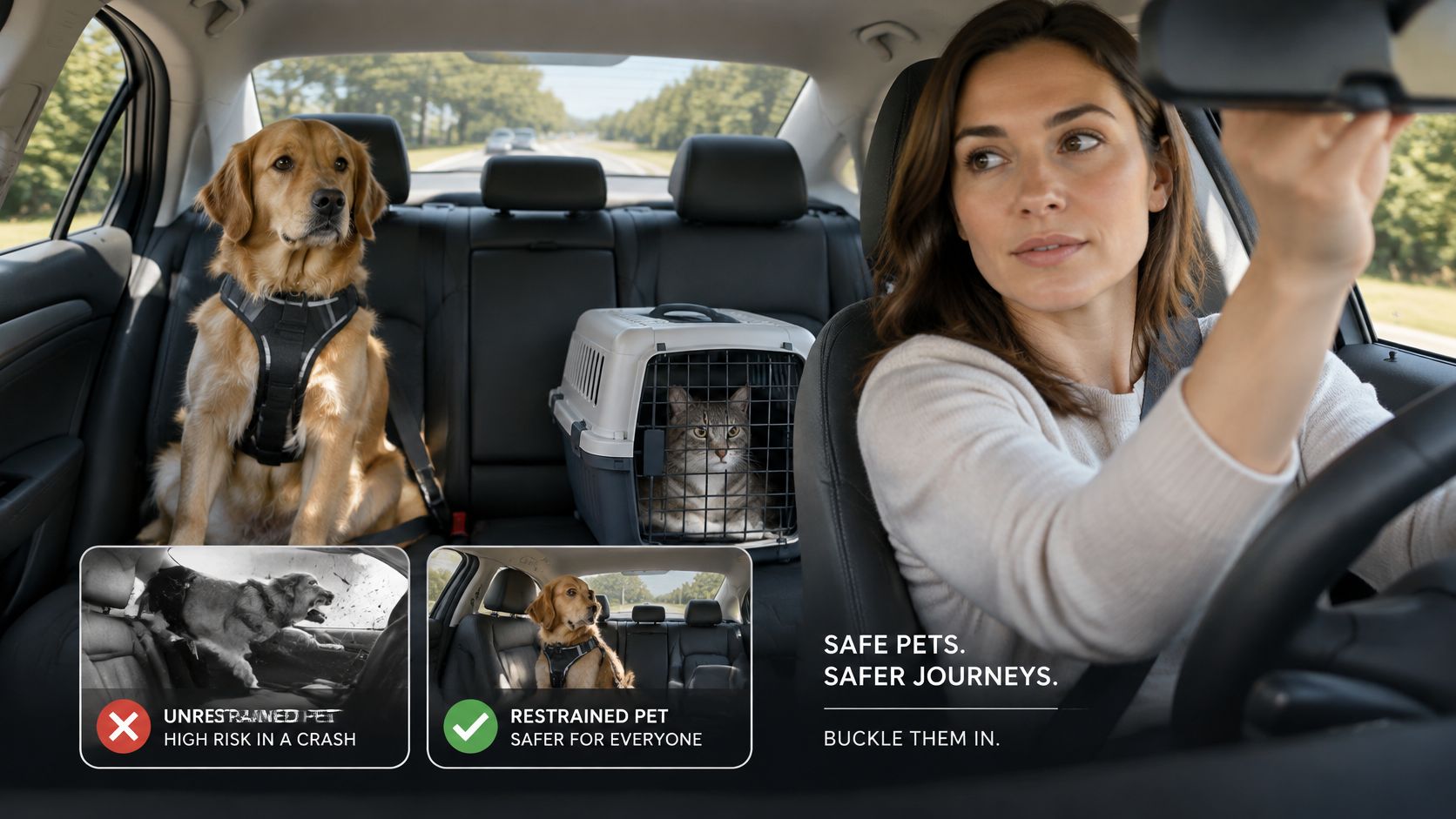
A calm pet still needs a restraint. An AVMA article reporting a 2010 American Automobile Association survey noted that more than 80% of respondents recognized the danger of an unrestrained pet, but only 16% reported using pet restraints.
If the restraint doesn't fit or attach securely, the vehicle shouldn't move. Familiarity with car travel doesn't change that stop rule.
The image illustrates the distinction between giving an animal space and providing a designated restraint.
Slower travel isn't a substitute
In a survey of 501 U.S. pet owners summarized by Progressive's pet travel safety guidance, 76% relied on traveling more slowly, while 27% used a carrier and 17% used a seat-belt harness. Moving cautiously is sensible, but it doesn't secure an animal during sudden braking.
The AVMA's pets-in-vehicles guidance explains that loose pets can distract the person operating the vehicle and injure themselves or occupants. It recommends secured carriers for small animals, properly designed vehicle harnesses for larger dogs, and placement away from active airbags.
A lap isn't an anchor point. Neither is a passenger holding a leash, and a blanket protects upholstery rather than restraining the animal.
Departure check: Test the attachment while parked. If the carrier shifts, the harness won't connect correctly, or the animal can't settle in the available space, reset the arrangement before leaving.
Inspect the setup, not just the label
For SUVs and vans, AVMA policy on animals in cargo areas calls for an appropriately sized, secured, ventilated kennel and climatic conditions suited to the animal's species, breed, and condition. An open rear space isn't permission to leave a dog loose or tethered there.
Check that bedding hasn't blocked ventilation and that luggage can't slide against the kennel. If the animal is already panting unusually or struggling with the restraint before departure, pause and assess the cause rather than assuming movement will calm it.
This video provides an additional visual reference for planning pet travel.
Families traveling with children should also confirm their separate seating requirements through our airport car service with car seats guide. Each passenger and animal needs an appropriate position without competing for the same attachment point.
Flights, Delays and Heat on Airport Transfers
Your flight lands forty minutes late, the baggage carousel takes another twenty, and your cat has been in a carrier since check-in. The road portion is the last leg of a longer journey, and the airline makes decisions the ground service cannot make. Carrier acceptance, animal eligibility, documentation, and check-in procedures must be confirmed directly with the airline before you schedule a pickup.
Travelers regularly find airline eligibility rules, pet policies and check-in procedures unclear, and the U.S. Department of Transportation's flying-with-pets guidance directs passengers to verify airline-specific requirements. A booked car confirms the pickup, not the flight: airline staff still decide at the counter whether the animal and its carrier are accepted.
That split is the core of airport pet travel. A pet-friendly policy gets the animal into the vehicle; flight status, restraint in the cabin, and the waiting plan determine how the transfer goes.
What we can coordinate on the ground
On the road side, we track the flight in real time, adjust pickup timing for delays, coordinate curbside readiness, and wait when a flight arrives late. Our guide to tracking flights in real time explains that part of the arrival plan.
Keep your phone reachable. Landing, collecting baggage, and being ready at the curb with your pet are three separate milestones, and they rarely happen at the same minute.
Airport transportation covers:
- Major commercial airports: JFK, LaGuardia (LGA), Newark (EWR), and Long Island MacArthur (ISP).
- Private-airport trips: East Hampton (JPX), Montauk (MTP), and Gabreski (FOK).
- Off-hours travel: Early-morning and late-night pickups, with the meeting location and contact plan settled before travel.
A terminal change or missed connection needs a direct message, even with tracking running. Send the revised flight details in one message so the chauffeur and the booking team work from the same itinerary.
Keep the waiting plan safe
Never leave a pet unattended in a parked vehicle. Heat builds inside a stationary car faster than most travelers expect, and a quick check of the arrivals board can stretch longer than planned. During an airport wait, keep the vehicle ventilated, check the animal's condition, and keep a responsible person with it. The pet stays with its guardian while someone else handles baggage questions or an airline issue.
For a departure, allow room in the schedule for safe unloading and airline procedures instead of timing arrival to the last possible moment. For an arrival, settle in advance who stays with the animal while the other traveler gathers bags.
Confirm these points before booking:
- Waiting limit: What is the maximum waiting time for this itinerary, and how are further changes handled?
- Pet location: Where will the animal remain during curbside coordination, and who stays with it?
- Missed connection: Who should receive the revised flight information, and how will the pickup be reconfirmed?
Keeping Pets Calm, Cool and Clean on the Road
Comfort during a prolonged trip requires more than opening a window. New York's Agriculture and Markets Law governing animal transport requires suitable food, water, space, air, shelter, and protection from excessive heat or cold during prolonged confinement or transportation, and addresses secure confinement of animals carried in open pickup areas.
For your ride, plan on a climate-controlled cabin with steady ventilation. Tell the chauffeur if the carrier feels warm or receives direct sunlight, and keep bags away from its air openings.
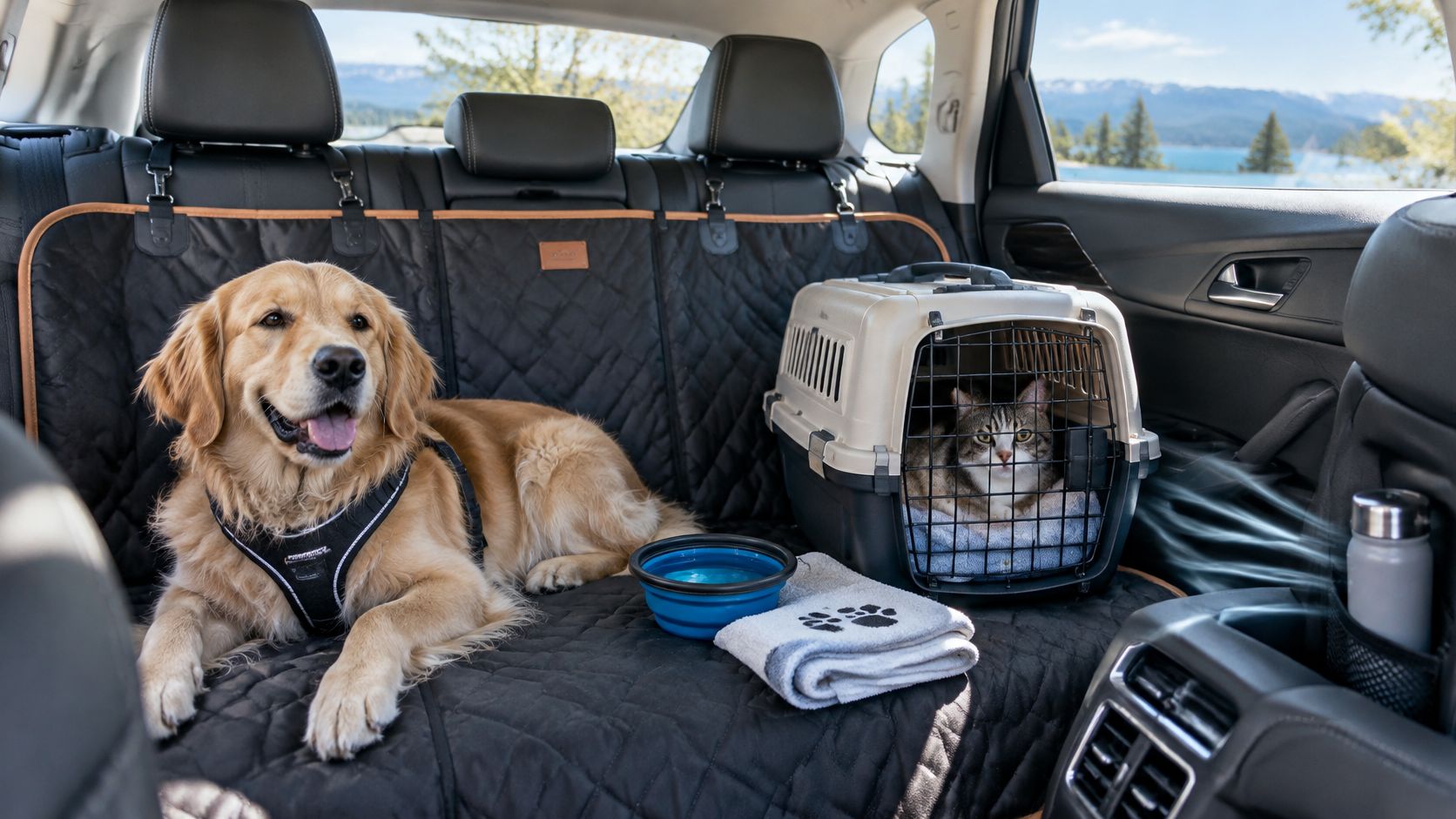
A familiar travel arrangement can help reduce unnecessary disruption, but the carrier still needs its vehicle attachment checked.
Manage water and familiar routines
Every vehicle has phone chargers and chilled water at no extra cost. Bring your pet's water bowl so you can offer water in a controlled way during an appropriate pause rather than trying to balance an open dish while moving.
Keep the usual feeding schedule when the itinerary allows, and ask your veterinarian about feeding or medication if your pet experiences motion sickness. Don't experiment with a new calming product on departure day.
Bring a towel or familiar bedding and cleanup materials even though all our vehicles are deep-cleaned daily. Use bedding that fits inside the restraint without interfering with buckles, straps, or ventilation. If your trip includes a later separation from your pet, Global Pet Sitter's anxiety advice can help you prepare that handoff as a separate part of the journey.
Respond to changes early
Watch the animal rather than assuming quiet means comfortable:
- Temperature or stress changes: Report unusual panting, drooling, whining, pacing, or trembling promptly.
- Comfort stops: Plan a short, safe stop on a long airport or East End run, with a leash attached before opening a door.
- Cleanup needs: Tell the chauffeur immediately about an accident so the vehicle can stop safely and the animal can be attended to.
A comfort stop is a planned pause in a safe location, not an invitation to open a carrier beside moving traffic.
The chauffeur can pause, adjust cabin temperature, or stop safely. Persistent or severe distress needs veterinary advice, not a cooler cabin. At arrival, keep the animal secured until you're ready to transfer it safely, then check bedding and leave the cabin clear of waste and loose supplies.
Pet Travel Scenarios Across the East End
A Southampton-to-Montauk outing, errands with a cat, a second-home move, and an airport return each need a different arrangement. The useful question isn't whether the trip includes a pet, but what the pet and client will be doing between pickup and arrival.
Car travel is a familiar choice: a 2024 PETS International and Yummypets survey of more than 800 pet parents in the United States, Canada, the United Kingdom, and France found that 94% used cars to transport their pets, according to GlobalPETS' account of the survey.
A day out or errands with waiting
Southampton to Montauk with a dog. Say you're taking your dog for a day out, using an SUV with a confirmed rear harness or secured crate. For beach and shopping trips, our chauffeur drops you at the destination and circles back when you text.
Agree on the return window before the outbound pickup. A text signals that you're ready, but it shouldn't be the first discussion of where and when you'll meet again.
Multi-stop errands with a cat. You need to visit a veterinary clinic and collect supplies before returning home. An hourly booking keeps the chauffeur and vehicle with you for as long as needed, within the arranged itinerary, while the cat remains in its carrier during travel.
List every stop and the carrier size when booking. Also establish who stays with the cat at any stop where the animal won't accompany you indoors.
A move or an airport homecoming
A second-home move with cats and luggage. Suppose you're moving two cats in separate carriers alongside suitcases and household bags. A Mercedes-Benz Sprinter may provide the right layout, provided each carrier has a suitable secured position and luggage is kept from shifting into it.
Count animals and bags together. Choosing a van because the cats are small misses the actual loading problem: carriers need protected space that luggage can't occupy.
An airport return with a senior dog. After a flight, a senior animal may need a careful handoff rather than a rushed curbside load. Send the flight number, note any mobility concerns, and coordinate readiness with the chauffeur so the dog isn't standing outside while the group reorganizes bags.
Keep the dog with a responsible person throughout the handoff, never alone in a parked vehicle. Explain whether it needs assistance entering the vehicle so the loading approach can be discussed beforehand.
Before requesting your quote, match your journey to its closest pattern: drop-off and return, multi-stop waiting, a luggage-heavy move, or a flight-linked transfer. That tells us more about the required service than the destination alone.
Text for a Quote and Book Your Pet-Friendly Ride
A well-planned pet ride rests on a restraint matched to each animal, a vehicle that fits the complete traveling party, and timing that reflects the actual journey. Those checks give you something practical to confirm before travel rather than a broad promise that pets are welcome.
Hamptons Leisure Limo uses fixed pricing with no surge fees, so you receive the total before the ride. Pet count, size, and carrier dimensions belong in the quote itself, alongside the route and schedule.
Send a complete first message
Text (631) 294-0747 for a quote with:
- Route: Pickup and drop-off points, including any intermediate stops.
- Schedule: Travel date, pickup time, and appointment details or flight number.
- Animals: Number of pets, species, and approximate weight of each.
- Equipment: Carrier dimensions or harness details, plus any loading concerns.
- Traveling party: Human passenger count and luggage so the vehicle can be matched to the whole group.
If a detail changes after booking, send the updated information before departure. A different carrier, an additional pet, or more luggage can change the layout even when the route stays the same.
Confirm the service and the setup
We're fully USDOT registered and commercially insured, giving clients a verifiable basis for checking the transportation service. Those credentials matter, but they don't replace the pet-specific preparation that makes the assigned vehicle suitable.
You don't need every answer before your first text. Send what you know, identify anything still undecided, and our team will confirm the restraint arrangement and vehicle before the day of travel.
Hamptons Leisure Limo offers private, pet-friendly transportation for airport transfers, East End outings, and longer journeys, with the animal's needs included in the booking discussion. Visit Hamptons Leisure Limo to explore the service, then text (631) 294-0747 with your route and pet details for a fixed quote and a confirmed travel plan.
Ready to Ride with Hamptons Leisure Limo?
Fixed pricing. No surge fees. 30 years of experience serving the Hamptons. Text us what you need and we will send a quote.